

In recent years, Internet of Things (IoT) technology has been revolutionizing the agricultural sector, enabling farmers to optimize resources, increase productivity, and ensure sustainable practices. By connecting devices, sensors, and machinery, IoT provides real-time data that helps improve decision-making and boosts overall crop yield. In this article, we will explore the various applications, benefits, and future potential of IoT devices in agriculture, as well as their role in addressing global food security challenges.
What are IoT Devices in Agriculture?
IoT devices in agriculture are essentially connected tools and equipment designed to collect, analyze, and transmit data across farming operations. These devices often include sensors, cameras, GPS modules, and other internet-enabled tools that enable farmers to monitor various aspects of farming remotely. They provide actionable insights into soil health, weather patterns, crop conditions, and machinery efficiency, making it easier to manage resources and enhance agricultural practices.
Benefits of IoT Devices in Agriculture
1. Improved Crop Monitoring and Yield
IoT devices allow for real-time crop monitoring by collecting data on moisture levels, temperature, nutrient content, and growth stages. This allows farmers to address potential issues proactively, such as watering needs or pest infestations. With this data-driven approach, crop yield can be significantly improved, as timely decisions prevent losses and ensure optimal growing conditions.
2. Efficient Resource Management
One of the most significant advantages of IoT in agriculture is its ability to optimize resource utilization. By tracking water usage, fertilizer distribution, and energy consumption, IoT-enabled systems can help farmers conserve resources. Precision agriculture systems, for instance, apply inputs such as fertilizers and pesticides only where they are needed, reducing waste and environmental impact.
3. Predictive Maintenance of Equipment
Farm machinery is essential for planting, harvesting, and other field operations. IoT-enabled sensors on equipment can monitor operational health and predict potential breakdowns, enabling timely maintenance. This minimizes downtime and maximizes productivity, as farmers can avoid unexpected malfunctions during crucial seasons.
4. Enhanced Animal Health and Productivity
In livestock farming, IoT devices like wearable sensors monitor the health and well-being of animals. These sensors can track vital signs, movement, feeding patterns, and reproductive cycles, alerting farmers to potential health issues early on. Improved animal health leads to higher productivity, reducing mortality rates and ensuring better yields of milk, meat, or wool.
Types of IoT Devices Used in Agriculture
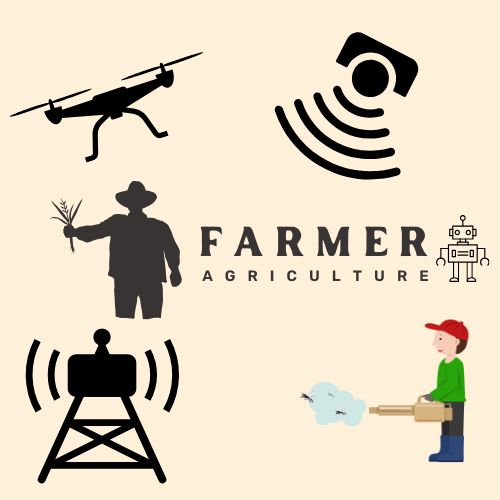
1. Soil Sensors
Soil sensors are essential IoT tools that monitor soil conditions such as moisture content, pH levels, and nutrient availability. By using soil sensors, farmers gain a better understanding of when and how much to irrigate, fertilize, or add soil amendments. These insights lead to healthier soil and stronger crop growth.
2. Weather Stations
Weather stations equipped with IoT sensors gather local climate data including temperature, humidity, wind speed, and rainfall. This data helps farmers predict weather patterns, determine planting and harvesting times, and protect crops from adverse conditions. By knowing when extreme weather is expected, farmers can take preventive measures to minimize crop damage.
3. Drones
Drones are becoming an indispensable part of modern agriculture, offering aerial imagery that reveals field conditions like crop health, soil erosion, and pest infestations. Equipped with high-resolution cameras and multispectral sensors, drones can assess large areas quickly, enabling more precise crop management strategies.
4. Livestock Monitoring Sensors
Wearable sensors and smart tags attached to livestock provide real-time information on animal health and behavior. These sensors monitor activity levels, body temperature, and heart rates, helping farmers detect health issues early. They can also assist in tracking animal locations, which is especially valuable for managing herds in extensive grazing areas.
5. Automated Irrigation Systems
Automated irrigation systems, guided by soil moisture sensors, can control water flow based on real-time data. These systems ensure that crops receive the right amount of water at the right time, reducing water waste and energy costs. In regions with water scarcity, automated irrigation can significantly improve sustainability and productivity.
How IoT Devices Are Transforming Agricultural Practices
Precision Agriculture
IoT is the backbone of precision agriculture, a method that utilizes data-driven insights to optimize farming practices. Precision agriculture relies on IoT devices to collect data on everything from crop health to soil conditions, allowing farmers to make targeted decisions. This technology reduces the need for extensive chemical applications, resulting in safer and more sustainable practices.
Smart Greenhouses
Smart greenhouses equipped with IoT sensors automatically regulate temperature, humidity, and lighting based on the needs of the plants. This environment-controlled approach enables year-round farming, high yields, and reduced dependency on weather. IoT-powered greenhouses can also help farmers optimize space usage, making it possible to grow more crops within limited areas.
Supply Chain Management
IoT devices are not only useful on farms but also play a crucial role in supply chain management. Through GPS-enabled tracking systems, farmers can monitor the location, temperature, and condition of produce in transit. This visibility helps ensure that products reach consumers fresh, reducing food waste and enhancing traceability for quality assurance.
Challenges and Considerations in Implementing IoT in Agriculture
High Initial Costs
While IoT technology offers numerous benefits, the initial investment can be high, especially for small-scale farmers. The cost of installing sensors, drones, and automated systems may be prohibitive for some. However, as the technology advances and becomes more accessible, these costs are expected to decrease.
Data Security and Privacy
IoT devices generate vast amounts of data, raising concerns about data privacy and security. Farmers need to ensure that sensitive information, such as land and crop data, is protected from potential cyber threats. Choosing reputable vendors and employing secure data management practices is crucial for maintaining confidentiality.
Technical Knowledge and Training
Many IoT solutions require technical knowledge and training to operate effectively. Farmers need to be educated on using and maintaining IoT devices, as well as interpreting the data they produce. Programs that offer training in IoT applications for agriculture can help bridge the gap between technology and practice.
Future of IoT in Agriculture
As the global population continues to grow, IoT technology will play an increasingly important role in meeting food demand. Emerging technologies, such as AI-driven analytics, 5G networks, and blockchain, are expected to enhance IoT’s capabilities. For instance, 5G connectivity will allow for faster data transmission, making real-time insights more accurate and actionable.
Blockchain integration can further improve supply chain transparency, enabling better tracking of produce from farm to table. These advancements, combined with IoT, will empower farmers to make smarter, more efficient, and more sustainable choices.
Conclusion
IoT technology is transforming agriculture by enabling precision, automation, and efficiency across all farming operations. From monitoring crops and livestock to optimizing water usage and improving supply chain logistics, IoT devices empower farmers to increase productivity while promoting sustainable practices. As these technologies continue to advance, they hold the potential to shape the future of food security, resource conservation, and agricultural innovation.
